Sunday, February 23, 2014

2013 Racing One Ferrari 458 Competition

As if the 458 Italia was not race ready enough, the Italian automaker decided to enhance its performance by introducing the 2013 racing one Ferrari 458 Competition version.
The racing one team has come up with an aerodynamics package combining higher output with improved balance. It also provides for a better and broader wheel-tire combination.
Another distinct aspect of the racing one Ferrari 458 is that its light weight, just 2,690 pounds as opposed to the production model at 3,935 lbs.
2013-racing-one-Ferrari-458-Competition-by-the-corner-A

Specifications

General Info
Vehicle Type: Coupe Base Price: NA
Fuel Tank Capacity: 22.7 gals (86 L)* Miles Per Gallon: NA
Dimensions*
Length: 178.2 in. (452.7 cm) Wheel Base: 104.3 in. (265 cm)
Height: 47.8 in. (121.3 cm) Width: 76.3 in. (193.7 cm)
Curb Weight: 2690 lbs (1220 kg) Maximum Seating: 2 people
Performance
Engine: V8 DOHC Displacement: 4.5 Liter
Horsepower: 620 HP Transmission: 7-Speed F1 Dual Clutch
0-60 mph: 3.4 seconds** Maximum Speed: 200 mph** (322 km/h)
* 2013 458 Italia specs
** Estimated
Engine & Performance
Obviously, the main thrust of the racing one Ferrari 458 is under its hood, where you will find a 4.5 liter, V8 engine capable of delivering 620 horsepower.
The car features variable traction control paired with a 7 speed racing gearbox with a Getrag rocker switch. It accelerates from 0-60 mph in 3.4 seconds, with an estimated top speed of 200 mph.
2013-racing-one-Ferrari-458-Competition-in-SoCal-B
Exterior
As mentioned above, the 458 Competition's performance has much to do with aerodynamics. This is made clear by its exterior that include a new front spoiler, side skirts, and a new rear spoiler and wing as well.
The front air intake displays the proud Ferrari steed in its center and the hood features a huge reverse hood scoop for air flow. The headlamp compartment runs vertically towards the windshield.
The profile view is mostly wheels, with a low stance and bubble-like roof line swooping front to back.
The new rear wing dominates the vehicles rear, with small cylindrical taillights and centered dual exhausts at its bottom.
Interior
A glimpse inside is what you would expect of a race car. A heavily padded steering wheel is surrounded by red a blue function buttons. The Ferrari logo makes another appearance at the center.
Prominent is a performance display screen which sits where the speedometer and tachometer are normally located.
2013-racing-one-Ferrari-458-Competition-buttons-buttons-buttons-C

2015 Porsche 911 Targa

The 2015 Porsche 911 Targa was introduced by the German sports car company in 2014. It was presented at Detroit's North American International Auto Show.
The car represents the most recent in the long line of versions of Porsche's storied 911 brand, but contains a number of innovations. In particular, this is the first 911 to be combined to highly technologically advanced roof technology with the Targa idea that has served the company so well over the years.
2015-Porsche-911-Targa-going-A

Specifications

General Info
Vehicle Type: Coupe Base Price: $101,600
Dimensions
Length: 176.8 in. (449 cm) Wheel Base: 96.5 in. (245.1 cm)
Performance
Engine: Flat 6 Displacement: 3.4 Liter
Horsepower: 350HP Max RPM: 7400 RPM
Torque: 287 lb-ft @5600 rpm Transmission: 7-Speed Manual
0-60 mph: 5.0 seconds Maximum Speed: 175 mph (282 km/h)
* Targa 4
Engine & Performance
There are two six-cylinder engines for the 2015 model. The basic Targa 4 model offers a 3.4 liter, 350 horsepower engine that takes the car from 0-62 mph in just under five seconds and on to a maximum speed of 175 mph.
The more powerful Targa 4S iteration of the car increases the power to 3.8 liter 400 horsepower engine. An advanced Sport Chrono/PDK trim, this 911 can hit 184 mph and perform the 0-62 mph sprint in 4.4 seconds.
Carbon dioxide emissions are around the 225 g/km mark, while gas consumption runs at 25 mpg. The car is fitted with all-wheel drive.
2015-Porsche-911-Targa-in-black-D
New Technology
The underlying concept for the Targa models has always been seen in its window and pillar designs, and these remain broadly the same. There is no C-pillar, with the rear window instead wrapping around.
Above the front seats is a section of roof which can be removed to give the car a semi-open feel. The B-pillars are also gone, replaced by the wide bar that has always been a Targa feature.
However, driver convenience has been greatly increased with the introduction of a power-operated movable section; this can be operated by a simple push of a button.
2015-Porsche-911-Targa-in-twos-V
Exterior & Interior
The new 911's dashboard maintains the classic look of previous versions, with a 4.6-inch color screen being added to the five standard dials, including center-mounted tachometer.
The console, which slopes forward, allows easy access to important controls including roof operation.
Black fabric is used to line the interior of the Targa bar and roof, and there is space for the detachable part of the top to be stowed behind the rear seats.
The rear window has been designed to allow the maximum possible amount of light into the car's cabin.
2015-Porsche-911-Targa-inside-C

2014 Ford Escape


Foot-Activated Liftgate

• With the key close by, simply kick your foot under the bumper to open the power liftgate

• Perfect when your hands are full 

Available EcoBoost® Engines

• 1.6L EcoBoost I-4 engine - EPA-estimated rating of 23 city/32 hwy/26 combined mpg*; 178 horsepower, 184 lb.-ft. of torque

• 2.0L EcoBoost I-4 engine - EPA-estimated rating of 22 city/30 hwy/25 combined mpg*; FWD, 240 horsepower, 270 lb.-ft. of torque
*Actual mileage will vary. Class is Small Utilities with automatic transmissions.
Figures achieved using 93 octane.
  

SYNC®

Available voice-activated SYNC® technology helps keep you connected to your world while you keep your eyes on the road and hands on the wheel.27

Once your phone is paired to the system, SYNC takes your connections to the next level.
• Stay in touch with hands-free calling
• Stay entertained with voice-activated commands
• Stay assured with 911 Assist®
• Stay connected to all your favorite28 mobile apps with SYNC AppLinkTM (on select vehicles)63

Exterior Design

Kinetic design conveys the Escape in motion even when it's parked.

• Large trapezoidal lower grille
• Z-shaped body lines
• Modern, athletic, agile look
• Available HID headlamps with LED accents


Wednesday, May 2, 2012

2013 Buick Verano

A newly developed fiber-polymer based material that feels like hard carpeting lines the wheel wells. Not to worry, it won’t absorb water, but it does a good job of soaking up sounds from the tires and suspension.

2012 Buick Verano green

To further improve noise levels in the cabin, Buick engineers cranked up the creativity by using recycled denim. It’s washed, cut and placed under the rear seats to again suppress road noise.

SMART OUTSIDE, LESS INTELLIGENT INSIDE

2012 Buick Verano Red back

Carrying the conservative styling you would expect from a Buick, the Verano sports signature features like the brand’s waterfall grille and blue bezels around the headlights. It’s a clean design with a few extra touches of style thrown in to class-up its look. Handsome, yes, but it won’t draw a crowd.

Unfortunately the interior is totally underwhelming. Even at the highest price point ($25,965 before destination) fully adjustable power seats are simply unavailable. The seat cushion slides forward and backward and tilts electrically, but the backrest does not. In fact, adjusting the backrest angle involves fiddling with a poorly placed lever. There’s also no memory function.

It’s also hard to see out of the Verano’s rear, an issue that’s further compounded by the lack of a backup camera. It seems strange that this car would forego such a feature given that the majority of Buick buyers are well on in years.

2012 Buick Verano center console

A thick C-pillar and small window left us wanting more out of a car that claims luxury status. That said, our car did have rear parking assistance, which is available on all models but the base trim.

Thankfully, the steering wheel both tilts and telescopes, even if the lever for this feature almost never wanted to lock back in place smoothly.

What our top-spec model did have was a smart key that unlocks the door when you touch the handle. Get in, press the brake pedal and hit the “Engine Start” button to fire it up. Simple yes, but locating the start button proved to be pesky. It wasn’t where you’d normally expect, and it doesn’t stand out either. Instead it sits above the stereo and looks just like any other button around it — odd.

Leather seats aren’t standard, but are an available option for an extra $2,180.

For a compact, the Verano has a spacious interior, but it still isn’t big enough to fit five adults comfortably. The trunk offers 14-cubic feet, which is as much as most mid-size sedans. Unfortunately the old style C-hinges can get in the way of your cargo.

MODESTLY POWERFUL, REASONABLY EFFICIENT

2012 Buick Verano Red engine

Buick’s engineers do, however, deserve credit for the Verano’s powertrain. Currently the only engine available with the Verano is a 2.4-liter four-cylinder engine that produces 180 hp and 171 lb-ft of torque.

It’s mated to a smooth shifting six-speed automatic gearbox, which transfers power to the front wheels. Unlike past Buick it doesn’t have a big engine, but it is still smooth and revs up to speed pleasantly. Few drivers will complain about a lack of grunt, but to please those who do, Buick will offer a 2.0-liter, turbocharged motor next year.

For now the current powertrain offers decent pace with solid fuel economy. The Verano is rated at 21 mpg in the city and 32 mpg on the highway. Those numbers aren’t bad, but they also don’t stack up to it’s the competing Acura ILX which gets 24/35 mpg city/highway.

Given the dampened ride and reasonable fuel economy the Verano is well suited for highway cruising, but what about city driving? Thankfully the ride on uneven and broken city streets is very good but a 36-foot turning radius makes parking in tight spaces difficult. We were surprised to find areas that would normally take a single maneuver requiring extra adjustment.

2012 Buick Verano Red parked

As for handling, the Verano is easily one of the best handling Buick’s we have come across – not that there’s much competition within its ranks. You’re not going to feel like taking on the switchbacks, but if you encounter any bends, the car feels competent with reasonably responsive steering.

Standard safety features include 10 airbags, traction control, anti-lock brakes, and six months of OnStar.

THE VERDICT

Branded as a premium model, it also makes for an excellent and highly polished family car. Perhaps its best feature yet is the $22,585 starting price. The mid-level “Convenience Group: package adds $1,200 to the base price, while the top-end “Leather Group” costs $2,180. Considering the Acura ILX starts at $25,900 the Verano is more of a value proposition.

2012 Buick Verano wow

Designed in the hopes of attracting younger buyers to the brand, the Verano is Buick-enough to please loyalists, though it might still feel a little too mature for the Gen Y crowd to get on board.

A smart family sedan alternative for those who don’t need or want a mid-size car, the compact Verano works best for those looking to downsize their current Buick without compromising most of what the brand stands for.

2013 Ford Escape

If it ain’t broke, replace it. That, at least, seems to be the motto at Ford when it comes to the brand’s Escape compact crossover.

FAST FACTS

1. Three engines are on offer: a 168 hp 2.5L, a 178 hp 1.6L EcoBoost and a 240 hp 2.0L EcoBoost.

2. Fuel economy for those three engines is: 22/31, 24/33 and 22/30 mpg (for front-wheel drive).

3. The 2013 Escape starts at $23,295 and tops out at $31,195 (including $825 for delivery).

4. An available hands-free liftgate is a segment first.

Truthfully, the previous Escape was not without its flaws, many of which were simply the result of it being an old product. And yet people flocked to Ford dealers to trade in whatever they could in order to buy an Escape. What, then, made the truck-styled cute-ute a top choice for so many consumers? And yes, we did just answer our own question. Its looks, of course.

It’s shocking then, at least at first, that Ford would move away from the rugged, masculine and quintessentially American design in favor of a look that’s sleek, stylish and downright European. The reasons for the dramatic change are many and include everything from Ford’s new design philosophy to a larger plan to build cars globally. Boxy compact crossovers might work in America, but as far as Europeans are concerned, Ford might as well try and sell them a Crown Victoria.


COMPACT STYLE, BUT MORE SPACE

2013 Ford Escape Interior

With its sleek new style the Escape may now look more compact than its predecessor, though it’s actually larger, stretching four-inches more in length, with a two-inch longer wheelbase and an extra inch in width. It is, however, roughly in inch lower overall and loses a half-inch of ground clearance.

Interior room is up slightly, particularly in the rear seat, with one extra inch of legroom. Likewise, cargo room has been increased slightly to 34 cu-ft behind the 2nd row and 68 cu-ft total.

With the added size also comes added weight – a surprise considering most other automakers are shedding pounds in an effort to

2013 Ford Escape Back Seats
improve fuel economy. Overall, the 2013 Escape is in excess of 100 lbs heavier than its predecessor, or even more if you’re comparing it to the base 2012 model with the manual transmission – an option Ford axed for 2013 with the automatic now standard.

Regardless of the weight gain, fuel economy has been improved significantly, due both to engine technology as well as a shape that’s 10 percent more aerodynamic than the old brick-on-wheels design.

THREE FUEL-EFFICIENT ENGINE OPTIONS

The base 2.5-liter four-cylinder, about the only carry over item from the old Escape, is now rated at 22/31 mpg, up 1 mpg in the city and 3 mpg on the highway. (All mpg ratings are for front-drive models). Power numbers are down, but only minutely.

Replacing the V6 option for 2013 is an EcoBoost 2.0-liter 4-cylinder making use of both turbocharging and direct injection. It’s rated at 240 hp and 270 lb-ft of torque (an increase of 47 lb-ft), while fuel economy jumps 3 mpg in the city and an impressive 5 mpg on the highway.

2013 Ford Escape Pair

A third powertrain option is also available, though it’s not a hybrid. Ford has dropped the Escape hybrid option for 2013, opting instead to offer gas-electric version of the upcoming C-Max. Part of a larger eco car plan, Ford is certain to regret this decision as the Escape Hybrid was a popular option and not having it will allow another automaker to move in and fill that model’s place.

Instead, the “hybrid replacement” is an EcoBoost 1.6-liter engine rated at a lofty 24 mpg city and 33 mpg highway. Ford says that’s best-in-class, but the Mazda CX-5 achieves 26/32 mpg with an automatic transmission, or 26/35 with a manual.

2013 Ford Escape Red Bridge

Another bit of marketing spin you’re likely to hear from Ford is that the 33 mpg highway rating makes the Escape 1.6-liter even more fuel efficient than the outgoing Hybrid. That’s stretching the truth, however, as the 24 mpg city rating is nowhere near close to the 34 mpg rating of the 2012 Escape Hybrid.

Power for the 1.6 is, however, much improved over the Hybrid model, with 178 hp and 184 lb-ft of torque. While Ford does say only 87 octane is required, those numbers come when using premium. Power numbers for 87 octane haven’t been released, but they’re certain to be a little lower.

A few ponies here or there isn’t about to make a big difference either way, and the 1.6-liter EcoBoost motor should deliver perfectly acceptable driving performance. We’d like to verify that, but Ford had a shortage of 1.6-liters on hand to test and so we spent the day behind the wheel of a 2.0-liter.

It proved more than adequate, especially as it’s only available in the top trim Titanium model, with every conceivable feature including big 19-inch wheels.

A JOY TO DRIVE

2013 Ford Escape Front Right

The drive itself is excellent, as we’d expect from a crossover based on the fun Focus. It’s more enjoyable than it needs to be (always a bonus), reacting fast with a direct electric power steering system.

At highway speeds when the road deteriorated somewhat we did notice that the rear of the Escape seemed to slap around some. We’d suggest the culprit is a stiffly sprung suspension, which in turn is what helps make the Escape so enjoyable to drive. Again, with the larger 19-inch wheels and low profile 235/45/19 tires, much of that feel should be appropriately dampened with the 17s and higher-profile 235/55/17 tires.

Helping to make the 2013 Escape a more enjoyable drive, as well as a safer one, are two new technologies that Ford seems to be rolling out across its model lineup. Called Torque Vectoring Control and Curve Control, the former acts to slow the inside wheels in a corner using the car’s stability control and braking system, while the latter actually uses the brakes at each corner to subtlely slow the car by as much as 10 mph if you enter a curve too quickly. Likely to be imperceptible to most drivers, the result is a more enjoyable and safer drive.

2013 Ford Escape Rear Driving

ADDED TECH, PLUS A HANDS-FREE LIFTGATE

2013 Ford Escape Console

Those are just a few of the many class-exclusive features in the 2013 Escape, with others including Active Park Assist (which will parallel park the car for you), a blind spot monitoring system, front and rear park assist warnings, a cross traffic alert system that will notify you if an object is approaching as you reverse and even a hands free rear liftgate – watch the video above for a demonstration on how it works.

Inside, the cabin is very much a familiar feel to the Focus, with the high-tech MyFord Touch screen one of the coolest looking telematics systems on the market. With plenty of criticism of the early versions of MyFord Touch, Ford has since improved it, simplifying the screens and hiding some of the fancier options. Another notable addition is access to Audible.com, where you can download audio books.

Despite complaints, we’ve never had an issue understanding MyFord Touch, although many of the touch icons on the screen are still far too small.

With all these improvements and updates pricing for the 2013 Escape has jumped over its predecessor with the base crossover up roughly $1,000 to $23,295. SE models will start at $25,895 with the SEL at $28,695 and the top-trim Titanium at $31,195. (All prices include $825 for delivery).

THE VERDICT

After moving a quarter-million Escapes last year, Ford probably could have dragged the old box out for another generation. But the push is on to recreate the Blue Oval brand and the old look, along with a platform donated by the now-ancient Mazda 626, is a more than acceptable casualty of Ford’s global product plans.

It’s not as though the trade-off is one-sided either, with a new design that, despite being different, is undeniably handsome. The 2013 Escape also delivers a vastly improved driving experience, more fuel-efficient engines, plenty of technology and some amazing new features. It’s even able to maintain many of the more truck-like features, keeping a 3,500-lb tow rating (on the larger engine), while delivering more passenger and cargo room.

2013 Ford Escape Driving

For the most part Ford’s global gamble is certain to pay off, though it’s not hard to see some Escape loyalists jumping to the still boxy GMC Terrain. Ford’s smaller gamble, that of axing the Escape Hybrid, however, is sure leave many customers feeling jilted.

With the lack of a hybrid, Ford has also given up any claim to best-in-class fuel economy – regardless of any marketing spin you might hear. The new Escape is impressive, but it’s also packed with asterisks, so take it for a test drive but be sure to read the fine print.


Thursday, August 25, 2011

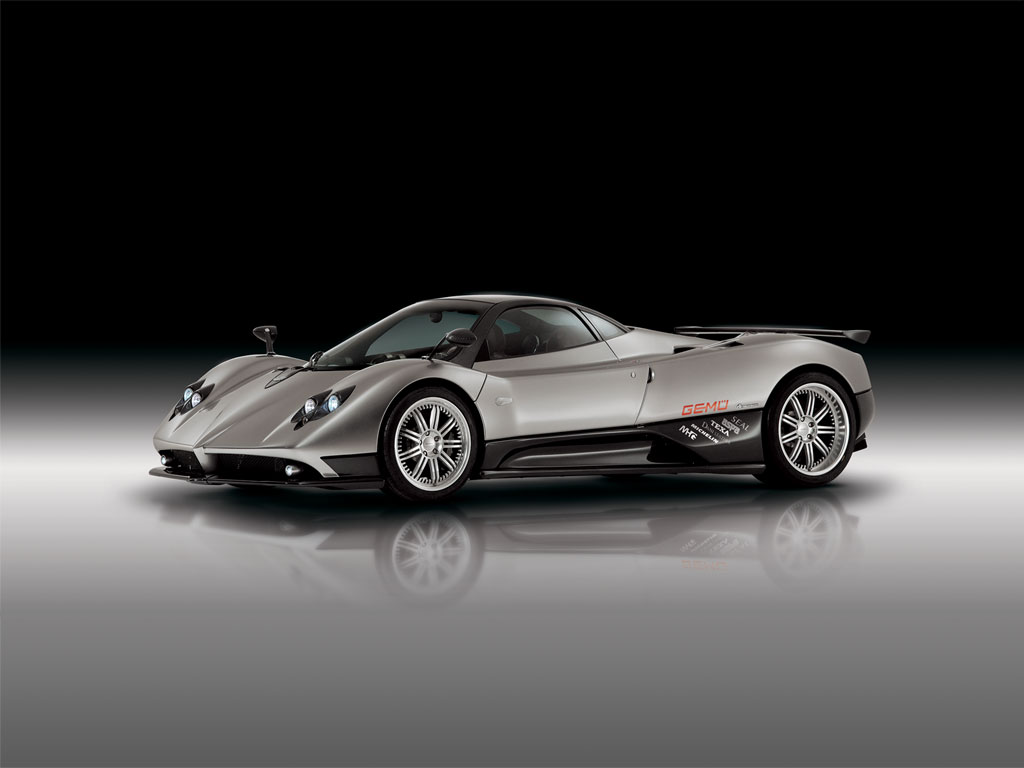
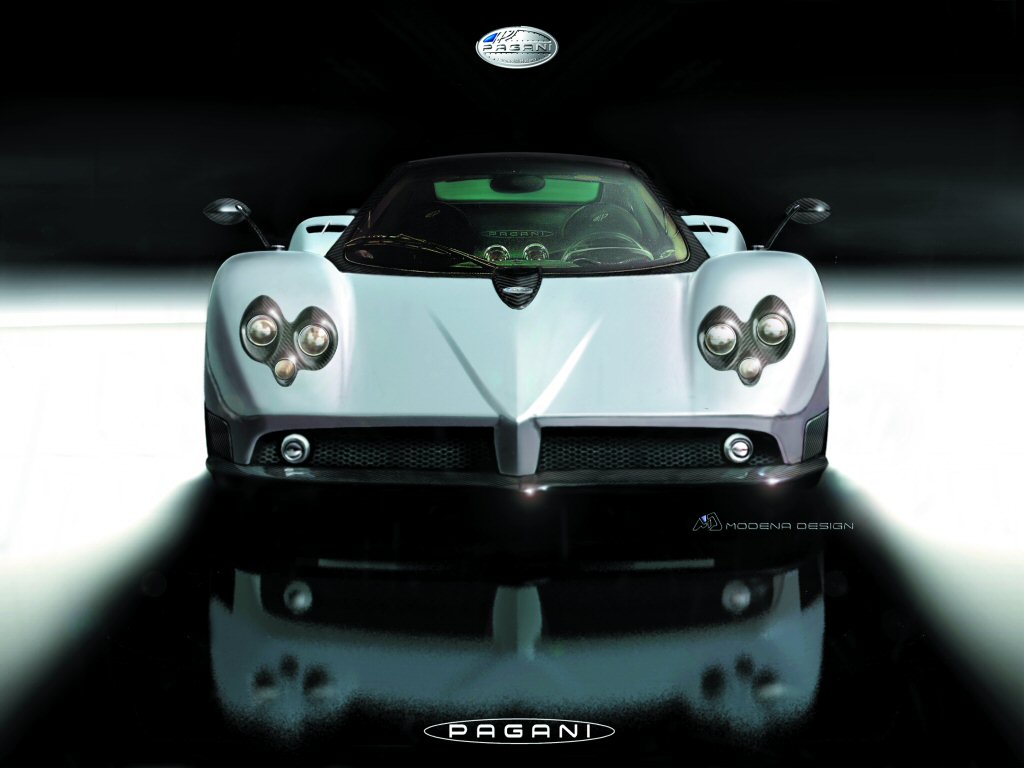
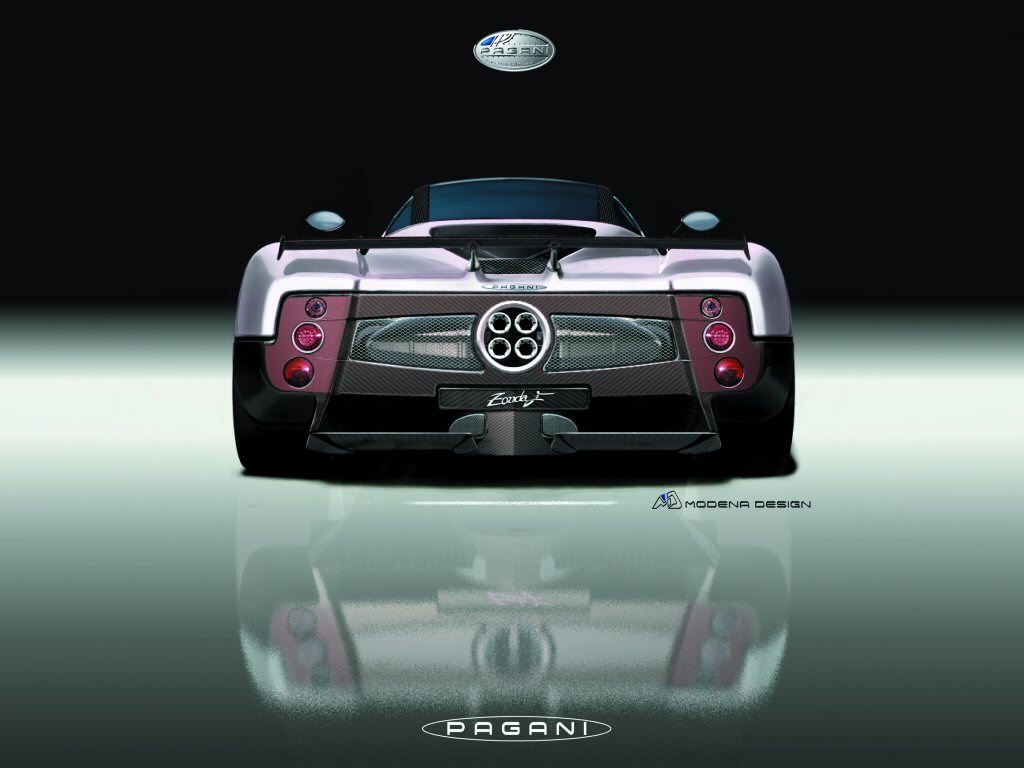
Pagani Zonda F

First appeared at Geneva at a Auto Show in 2005, the all carbon fiber super car can reach 60 mph (100 km/h) in just 3.5 seconds. With power of 443 kW/594 hp, and a top speed that passes 215 mph (346 km/h), Zonda F makes Pagani manufacturer to be at the level of another independent of famous super cars manufactures like Porsche, Lamborghini or Ferrari.
Pagani Zonda F

A car made by combining the sensibility of Juan Manuel Fangio, a F1 world champion 5 time in a row, about all that is related with technicality and the advance technology of Pagani, has a lot to offer, from the power to weight ratio of 384 W/kg, the six-speed manual transmission, the aerodynamic vents all around, not at least the carbon/ceramic brakes that allows the Zonda F to be on the top list of the cars with spectacular braking from 180 mph to 0 mph.

Pagani Zonda F
The V12 engine is a lot cooler because of the design of the car, larger in front, 7.3 liter Mercedes-Benz engine can reach now 620 bhp and gives almost 561 pound-feet of torque peaking at 4000 rpm. It has a length of 174.6 inch, a width of 80.9 inch and a height just about 44.9 inch.
Pagani Zonda F back view

Even if it's said to be a priceless super car, it will be on the market in 2008 at a base price of $667,321.

Pagani Zonda F vs Bugatti Veyron drag race - Top Gear


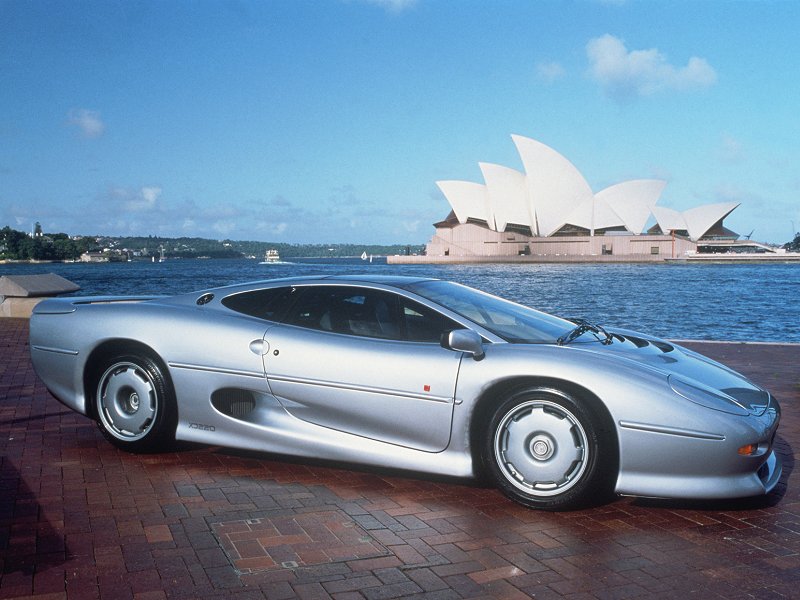
Jaguar XJ220


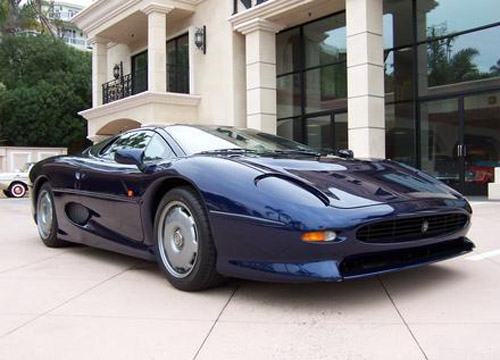
The Jaguar Xj220 is one of the forgotten super cars and it was produced in 1992 by Jaguar. This super car was the fastest car at that time. The vehicle features a 3.5 L V6 twin-turbo engine, which generates 542 horsepower at 7200 rpm. It has a 6-speed manual transmission, reaching 60 mph in 3.8 seconds and a top speed of 217 mph, an amazing speed for 1992. A total of 281 Jaguar XJ220 were produced and the original price was around $650,000. As of 2009, this car is worth around $150,000.

Jaguar XJ220


Jaguar XJ220 blue

Specifications

Vehicle Type: - 2-door coupe, production car
Price: - $650,000
Configuration: - Mid Engine / RWD
Engine: - Twin-Turbo V6
Capacity: - 3494 cc
Torque: - 475 lb-ft at 4500 rpm
Horsepower: - 542 bhp at 7200 rpm
Transmission: - 5-Speed Manual
Weight: - 3241 lbs
0-60 mph: - 3.8 sec
Top speed: - 217 mph


Jeremy Clarkson - Jaguar XJ220

Ferrari Enzo


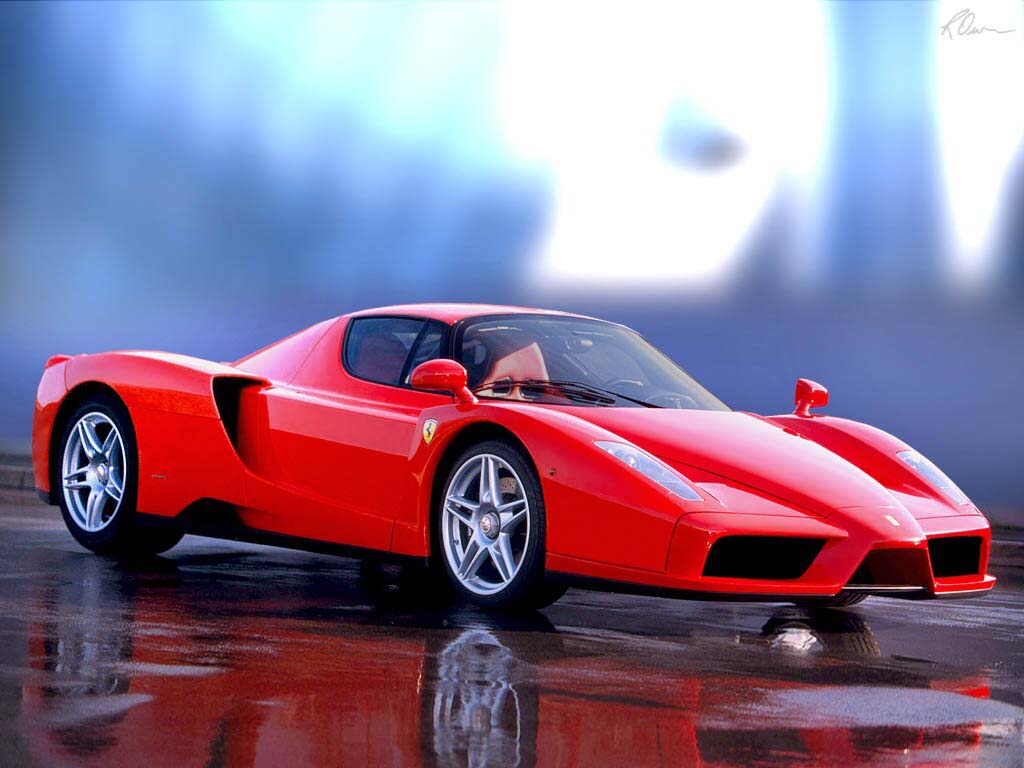
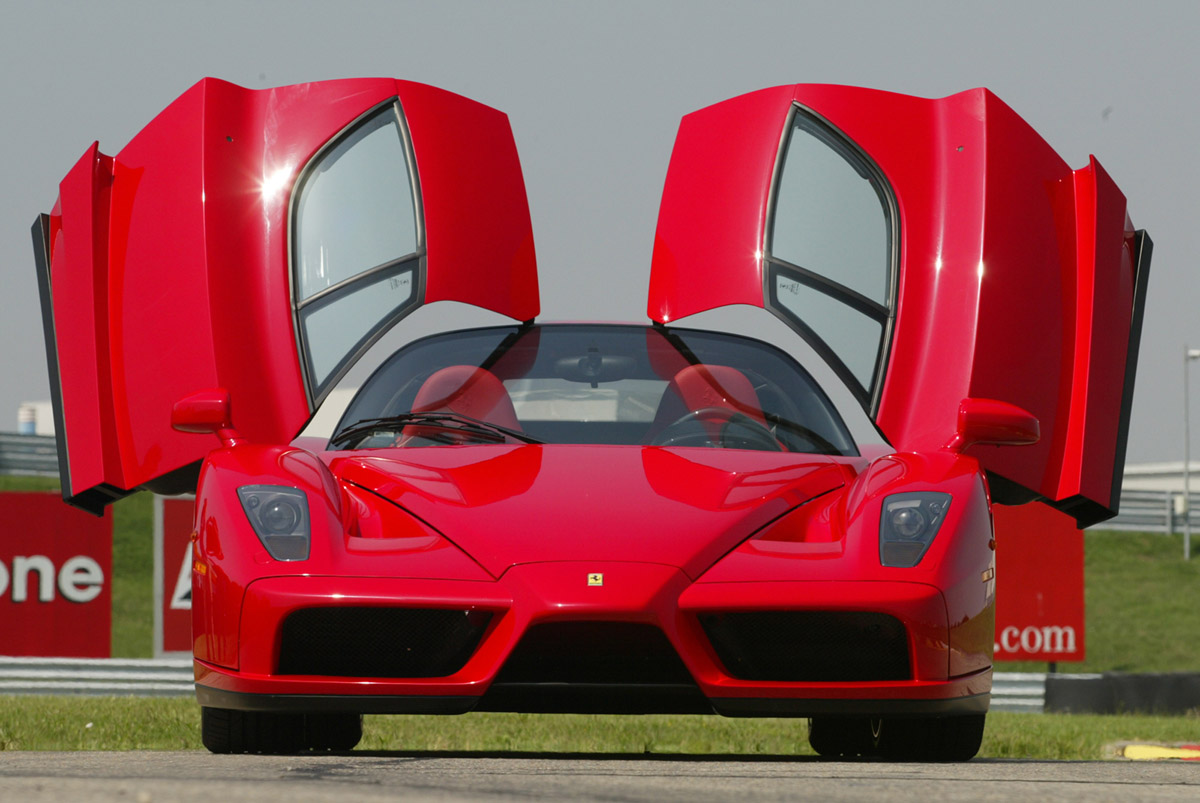
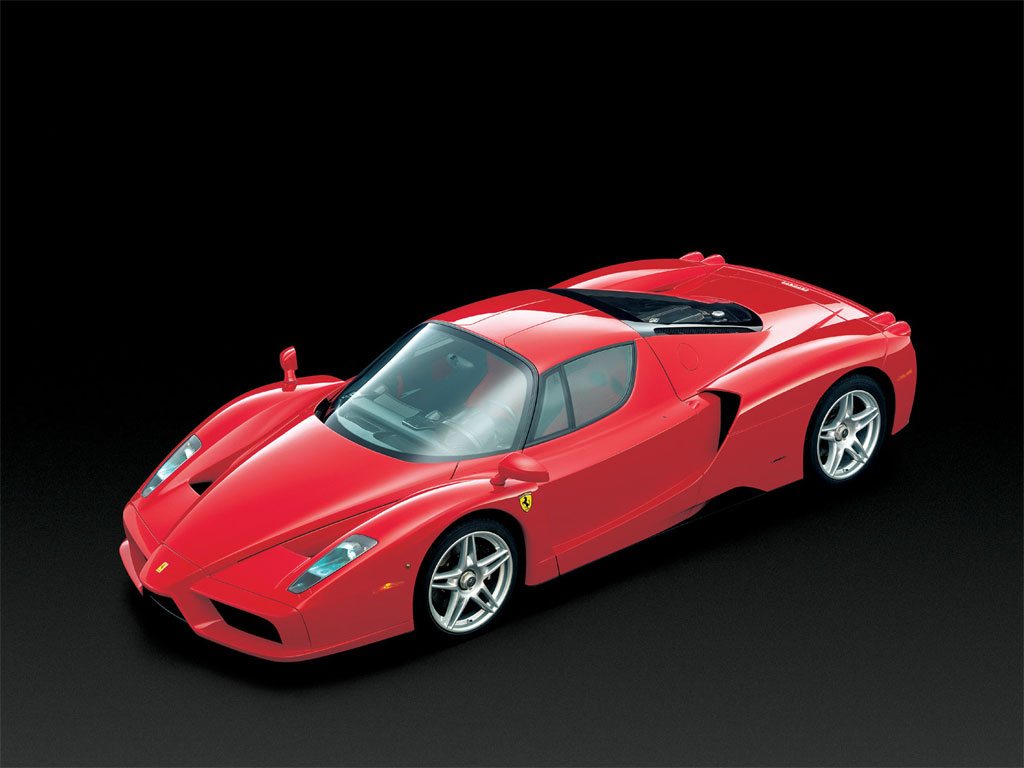
The Ferrari Enzo, named after the Ferrari's owner, is a high performance sports car which is well noted for its styling features. Initially, the Ferrari Enzo cost $670,000 and only 399 units were ever produced, but due to its high demand and limited supply, the price of the Ferari Enzo increased every time someone crashes and it is currently estimated at over $1,000,000.

Ferrari Enzo


The Ferrarri Enzo features a V12 engine with four valves per cylinder. The engine displacement is about 4700 cc and it delivers an output power of 660 bhp and 485 lb-ft torque. The Ferrari Enzo reaches the speed of 60 mph in 3.4 seconds and the top speed is about 217 mph. The Ferrari Enzo features 6-speed Semi-Automatic transmission and the gear shifts can be performed easily and smoothly even at higher loads.


Ferrari Enzo doors open front view


Ferrari Enzo front view

Specifications

Vehicle Type: - production car, two doors coupe
Configuration: - Mid Engine
Engine: - V12
Capacity: - 5988 cc
Torque: - 485 lb-ft
Horsepower: - 660 bhp
Transmission: - 6-speed Semi-Automatic
Wheelbase: - 104.3 inches
Length: - 185.1 inches
Width: - 80.1 inches
Height: - 45.2 inches
Weight: - 3020 lbs
0-60 mph: - 3.4 sec
Top speed: - 217 mph


Ferrari Enzo in Action - Ride Rev Accelerations Drifts Burnout


Ferrari Enzo in Action - Ride Rev Accelerations Drifts Burnout

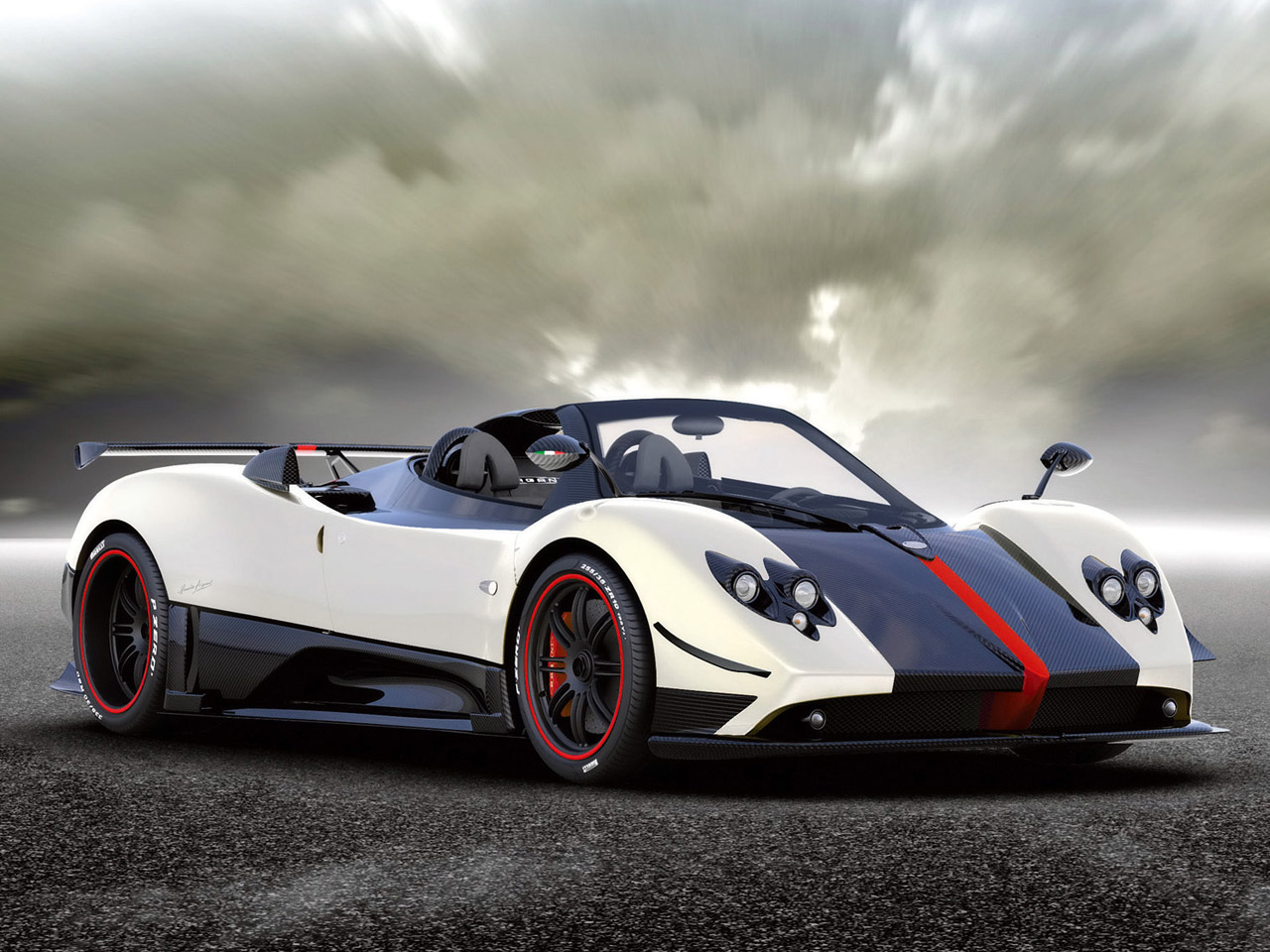
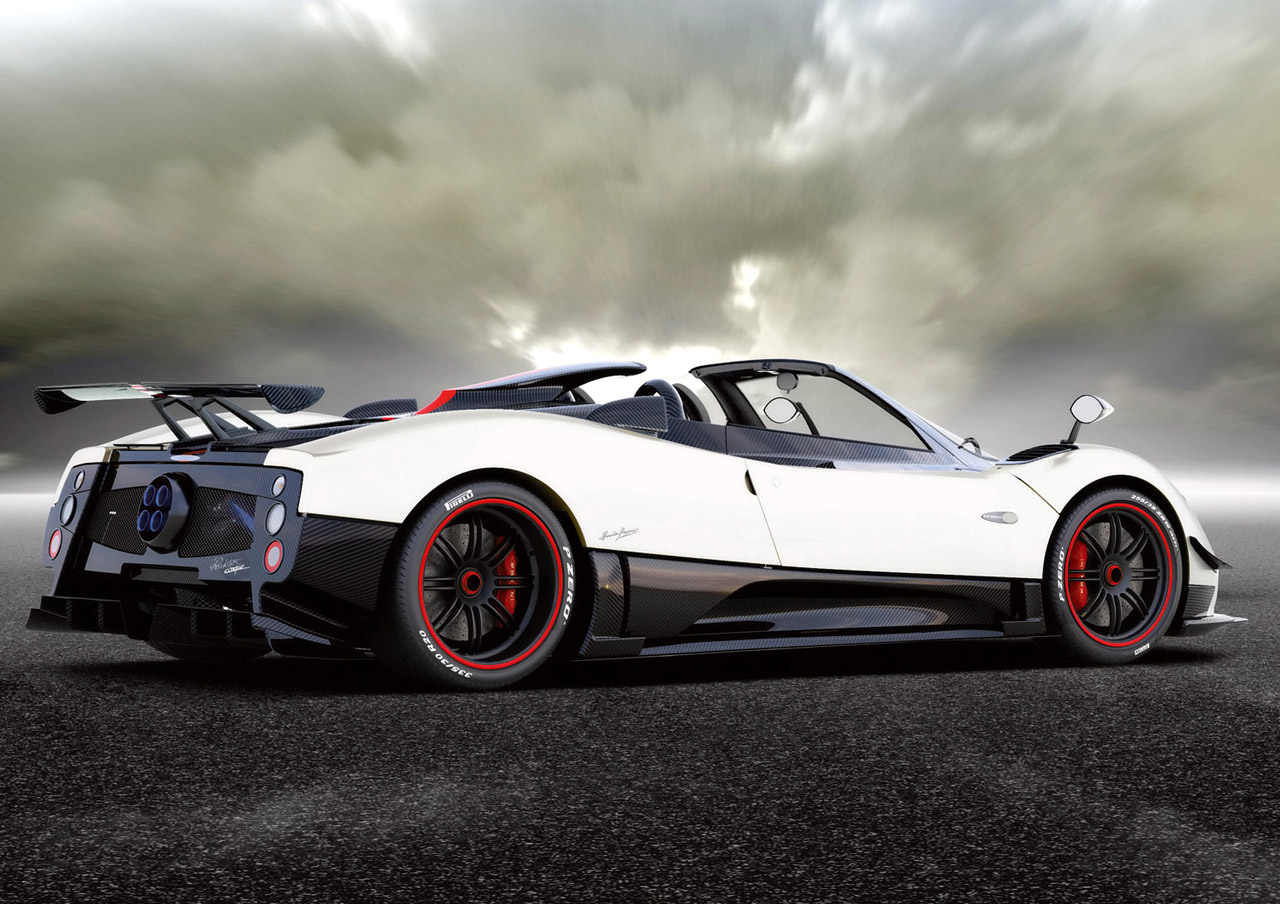
2009 Pagani Zonda Cinque Roadster


The 2009 Pagani Zonda Cinque Roadster is an exclusive offering from Pagani as the car manufacturer has limited the production of the roadster version of the Zonda Cinque coupé to just five units. Just like the Zonda Cinque, the Roadster was produced with weight reduction measures in mind to improve its overall performance, driving experience, and emission. Because the 2009 Pagani Zonda Cinque Roadster has no roof, its carbon-titanium chassis has been redesigned to make up for the missing roof.
2009 Pagani Zonda Cinque Roadster


The 2009 Pagani Zonda Cinque Roadster, a 2-door convertible production car, features a Mercedes-Benz AMG mid-engine (with rear-wheel drive) that boasts of a horsepower of 678 bhp and torque of 780 Nm. With it powerful engine, it can reach 60 mph within 3.3 seconds. The folks at Pagani have designed the car with ECU, ABS, and traction control by Bosch Engineering. The roadster has a 6-speed sequential transmission, a ceramic-coated Inconel/titanium exhaust system, magnesium and titanium suspensions, and APP monolithic wheels fashioned from aluminum and magnesium. The 2009 Pagani Zonda Cinque Roadster’s interior features Pagani leather/carbon-fiber racing seats.
2009 Pagani Zonda Cinque Roadster side view


Pagani Zonda Cinque Roadster in Puerto Banus


Pagani cinque roadster


With the assistance of growing technology and improving resources, people that cannot give their car for his or her entire day can take the assistance of a touchless car wash where their car gets cleaned quickly, and that they don't need to await getting their car back.


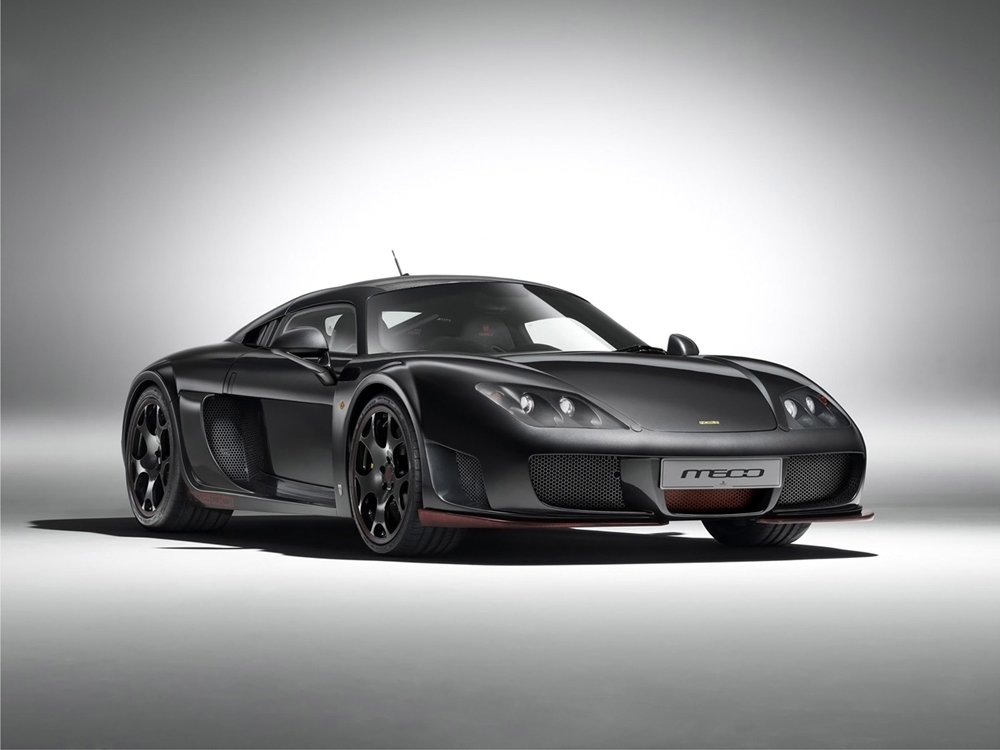
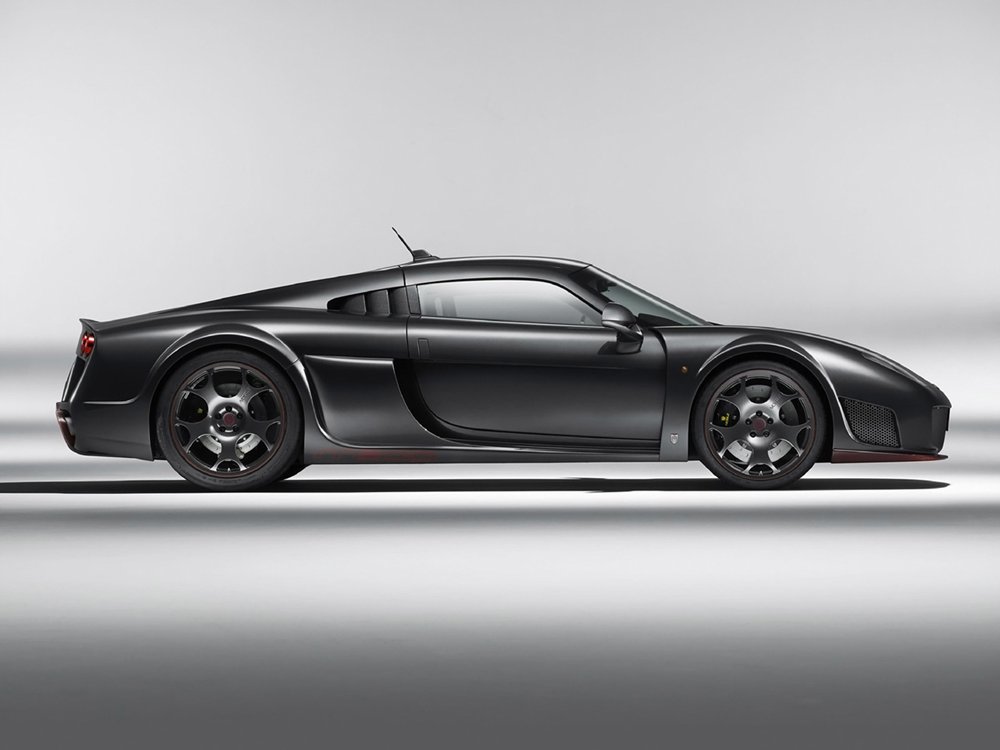
2011 Noble M600


On the recent Autosport International Racing Car Show, with their first carbon bodied production, Noble M600, was completed and shown with great critical acclaim. The Noble M600 is powered by a twin-turbo 4.4-liter Yamaha V8 engine with an output of 650 hp at 6800 rpm and 640 lb-ft of torque at 3800 rpm. It has a mid, longitudinal engine, rear-wheel-drive architecture and is equipped with a Graziano 6-speed manual


The Noble M600 measures 4360 mm in length, has a 2540 mm wheelbase and a 1578 mm wide track with a total weight of 1250 kg. It also has a power-to-weight ratio of 520 hp per tonne. The Noble M600 has an officially rated top speed of 225 mph and a 0-120 mph acceleration time of 8.9 seconds. It is built on a tubular space frame chassis with stainless steel tubes and a carbon fiber composite body. It promises good handling and control because of the power assisted rack and pinion steering wheel. The Noble M600 uses Alcon brakes with 380 mm discs and six piston calipers in the front and 350 mm discs and four piston calipers in the rear.

The supercar’s appearance maintains a slender and contoured shape that doesn’t scream for attention every time you look at it. It’s not that Noble copied design from other supercars, but on first glance, the M600 do have a few similarities. It’s just evidence that Noble used their competitors as an inspiration in developing a supercar.


Noble M600 - Top Marques 2011


red Noble M600 - Top Marques 2011

Gumpert Apollo


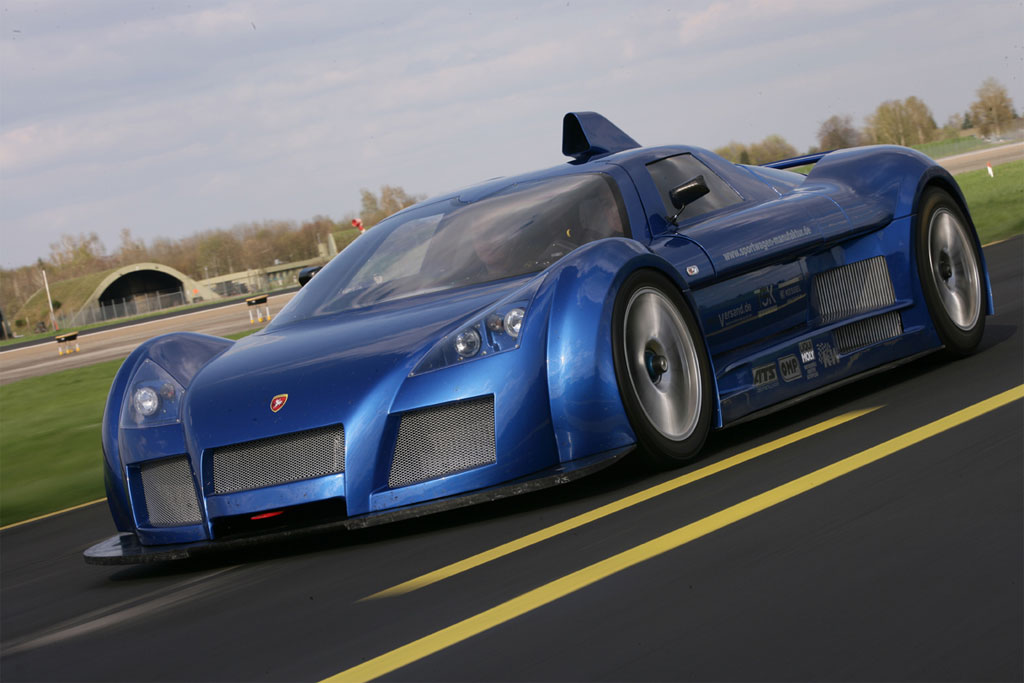
Roland Gumpert, an engineer who played a major role in Audi’s motorsport campaigns, envisions creating a car that is so aerodynamically efficiently that it can drive on the roof of a tunnel. In 2004, he founded his own company, Gumpert Sportwagenmanufaktur GmbH. Based in Germany; it released its first car, the Gumpert Apollo, in 2006. And wow, that car was just pecial

.


Exterior & Interior

The Gumpert Apollo is a distinctively shaped vehicle that takes no compromise in its pursuit of performance. One of the more elegant and unique looking vehicles on the planet, it has an extremely aerodynamic design that is more than capable of holding its own even on insane speeds. Various inlets located on the front and side of the car ensure that the turbocharged engine and brakes receive sufficient cooling, a crucial element for the high stress nature of racing. A huge roof scoop provides air for the engine that is located just in front of the rear axle.


Cost

Depending on the trim and optional equipment installed, the Gumpert Apollo costs in between $288,000 dollars to $438,000 dollars. A high price for sure, but only a few cars can compete against it, no matter what the price tag. It is one of the absolute fastest cars in the world, and will continue to be for years to come.

Specifications
General Info

Vehicle Type: Coupe
Est. Base Price: $238,00.00

Performance

Engine: 4.2-liter bi-turbo V8
Horsepower: 700 HP

Transmission: 6-Speed Automatic-Manual
Maximum Seating: 2 people

0-60 mph: 2.9 seconds
Maximum Speed: 225 mph (1609 kmh)

Fifth Gear - Gumpert Apollo


800hp Gumpert Apollo in Action - 270km/h Onboard!


Gumpert Apollo at Cars and Coffee in SoCal

McLaren F1


McLaren F1 - 3 different variations


McLaren F1 is the most powerful supercar produced by McLaren between the years 1994-1998, from the 100 cars: 65 are street versions, 5 are LMs (which was build to honor victory at Le Mans in 1995) and 3 are Gts (the road versions of the 1997 F1 GTR racing car) and 28 F1 GTR made for the roads.
The Chief Engineer Gordon Murroy`s concept refers to the use of expensive materials like: carbon, titanium, gold and for the first time, the use of carbon fiber monocoque chassis.

Bugatti Veyron vs McLaren F1 - Top Gear


McLaren F1 LM driving


The car has a top speed of 386 km/h or 240 mph (very good speed for 1994) and can reach a speed of 100 km/h in 3.2 seconds, 200 km/h in 6.7 seconds and 300 km/h in 30 seconds. The McLaren F1 was the fastest car in the world until Bugatti Veyron was introduced.

McLaren F1 doors open

When it was first introduced, it was priced at $970,000. This type of car is not produced anymore and it is very rare to find one of these on the market.

McLaren F1 GTR


Fifth Gear - Ferrari Enzo vs McLaren F1


McLaren F1 - Discovery Channel - Ultimate Cars

Koenigsegg CCX


Top Gear - Jeremy Clarkson tests Koenigsegg CCX - BBC


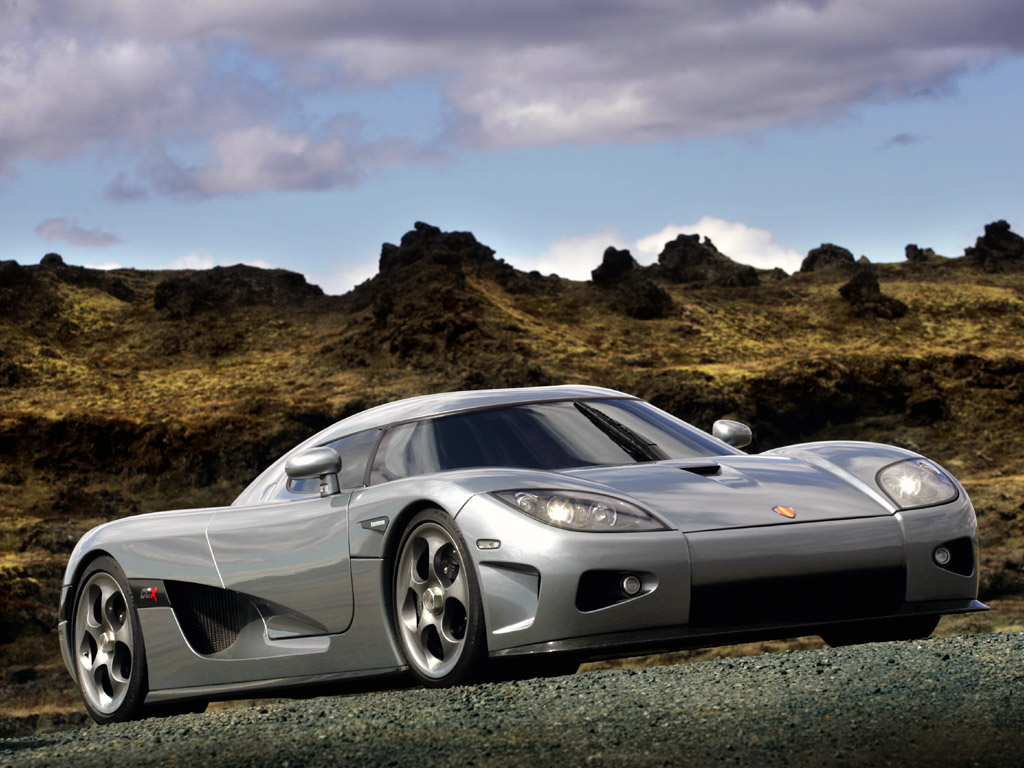
The Koenigsegg CCX is a supercar which features a breath taking CC shape and it is priced at $545,568

The word “CCX” means “Competition Coupe X” and the CCX was launched marking the 10th anniversary of Koenigsegg. The body of the car is made of aluminum and it features the fog lamps, front lamps, brake cooling system, optimal headlights, ICEM Surf CAD software and it has 50 mm space at the headroom, which makes it as the most spacious car.


Koenigsegg CCX in Iceland


.

Koenigsegg CCX driving


air conditioning system and the stylish dash board.
Koenigsegg CCX side view

Specifications

Vehicle Type: - production car, two-door Coupe
Configuration: - Mid Engine
Engine: - Supercharged V8
Capacity: - 4700 cc
Torque: - 678 lb-ft at 5700 rpm
Horsepower: - 806 bhp at 6900 rpm
Transmission: - 6-Speed Manual
Length: - 169.0 inches
Width: - 78.6 inches
Height: - 44.1 inches
Weight: - 2601lbs
0-60 mph: - 3.2 sec
Top speed: - 245 mph
Price: - $545,568


Koenigsegg CCX


Koenigsegg CCX vs Ferrari 430 Scuderia 50-300km/h

Saleen S7 Twin Turbo

The Saleen S7 is a high performance race car which features the powerful Twin-Turbo V8 engine.

The body of the Saleen S7 is made of aluminum and carbon fiber, as a result of this, the car is of less weight. The Saleen S7 features aluminum dampers and stabilizer bars at the front and rear. This ultimate supercar is priced at $550,000 and it can reach a top speed of 248 mph.

Saleen S7 Twin Turbo blue


The Saleen S7 features a Twin-Turbo V8 engine with a capacity of 7000 cc. The engine delivers an output power of 750 bhp at 6300 rpm and 700 lb-ft torque at 4800 rpm. The Saleen S7 reaches the speed of 60 mph in 3.2 seconds and 100 mph speed in about 6.2 seconds. The Saleen S7 features 6-speed Manual transmission and the gear shifts can be performed easily and smoothly even at higher loads.

Saleen S7 Twin Turbo


Drive with two Saleen S7 Twin Turbos


Saleen S7 TT Competition


Saleen S7 Twin Turbo orange back view doors open


Saleen S7 Twin Turbo white front view


Specifications

Vehicle Type: - production car, two-door Coupe
Configuration: - Mid Engine
Engine: - Twin-Turbo V8
Capacity: - 7000 cc
Torque: - 700 lb-ft at 4800 rpm
Horsepower: - 750 bhp at 6300 rpm
Transmission: - 6-Speed Manual
Length: - 188.8 inches
Width: - 78.4 inches
Height: - 41.0 inches
Weight: - 2950 lbs
Wheelbase: - 106.3 inches
0-60 mph: - 3.2 sec
0-100 mph: - 6.2 sec
Top Speed: - 248 mph
Price: - $555,000

2009 SSC Ultimate Aero


2009 SSC Ultimate Aero With Doors Open


2009 SSC Ultimate Aero WORLD RECORD TOP SPEED


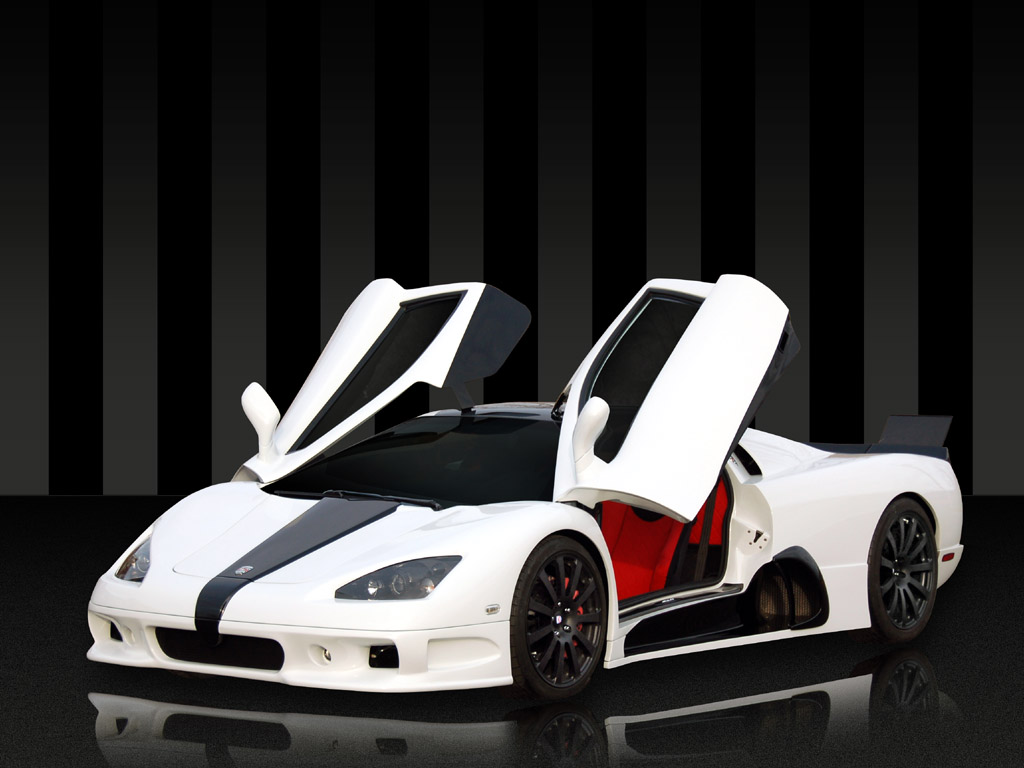
The SSC Ultimate Aero is a powerful engine sports car manufactured by Shelby SuperCars. The precious SSC Ultimate Aero TT is the world’s fastest production car, which travels at a top speed of 257 mph.

The new version known as 2009 SSC Ultimate Aero has been modified where some changes have been added to the exteriors, interiors, and the increase of horsepower about 15%. The most important change is the single piece aluminum block engine that improves the oiling capabilities and structure of the engine, so that the SSC Ultimate Aero produces an output of about 1287 horsepower.


SSC Ultimate Aero red side view


SSC Ultimate Aero TT
SSC Ultimate Aero - A BusinessWeek Exclusive


SSC Ultimate Aero BMW M5 - Fast Lane Daily - 14Sept07


SSC Ultimate Aero red back view

Specifications

Vehicle Type: -Production car, two doors coupe
Configuration: - Mid Engine/ RWD
Price: $654,000
Engine: - Twin-Turbo V8
Displacement: - 7000 cc
Horsepower: - 1287 bhp @ ---rpm
Max RPM: - 7200 rpm
Transmission: - 6-speed Manual
Width: - 82.7 in
Length: - 176.2 in
Height: - 43.0 in
Wheelbase: - 105.2 in
0-60 mph: 2.7 secs
Top speed: - 270mph

2011 Koenigsegg Agera


.


2011 Koenigsegg Agera R


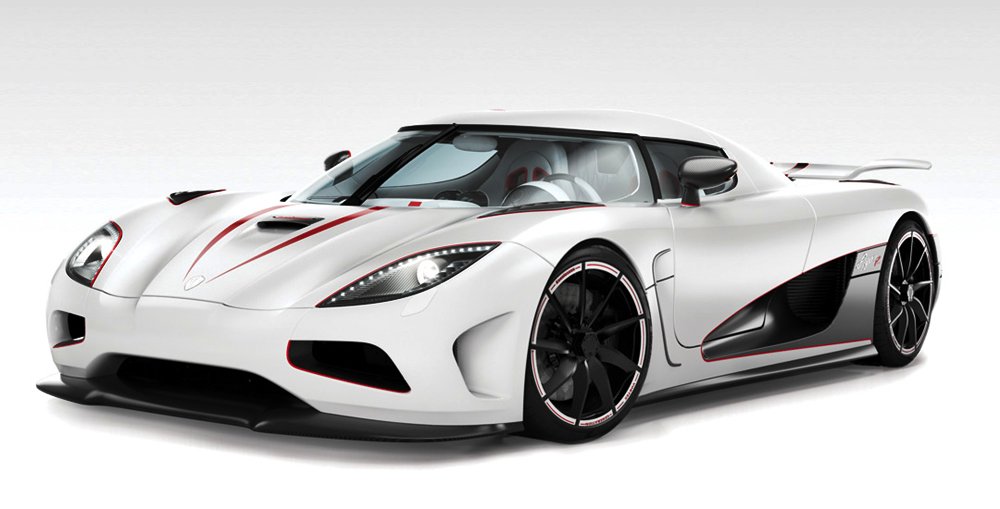
We’re not going to lie; when we picked the Koenigsegg Agera as our 2010 supercar of the year, we were pretty proud of ourselves. Not only did we buck the trend of crowning the mythical title of world’s best exotic to the Bugatti Veyron Super Sport, we actually gave it to a car that has 300-less horsepower than the current fastest machine on the planet. We figured that even if the Veyron Super Sport can wallop the Agera on the drag strip, the latter’s combination of appeal, speed, and cheaper price tag was more than what we could get from the Veyron Super Sport. Turns out, we haven’t seen the very best and most powerful version of the Agera yet. That is, until this year’s Geneva Motor Show. Ladies and gentlemen, feast your eyes on the Veyron SS-slayer, the Koenigsegg Agera R.

year:
2011

Engine:
4.7 liter V8 engine

Horse Power @ RPM:
1115@6900

0-60 time:
2.9 sec.

Top Speed:
260 mph


The Agera R uses a skeleton made of carbon fiber monocoque. It is very strong and lightweight. It also comes with VGR wheels that have spokes serving as turbine vanes which helps maximize the overall downward force generated by the sports car. The car in general is made up of very high quality materials befitting a car of its stature. The car is expected to cost somewhere in the vicinity of $1.6 million.

The Agera R features a 5-liter V8 powerful engine producing a mind-boggling 1,115 hp, much more powerful than the 910 hp engine of Agera. It also utilizes a 7-speed dual-clutch transmission. Imagine what happens when it unleashes all that power on the track.


2011 Koenigsegg Agera R


2011 Koenigsegg Agera R


2011 Koenigsegg Agera R


The top-of-the-line Bugatti Veyron Super Sport shares the same 8.0-liter, 16-cylinder engine, but with larger turbos and bigger intercoolers to push power to 1,183bhp, a jump of 196bhp. Torque increases from 921lb ft to 1106lb ft. This all means that it can reach a reported 267mph and that is faster than an Agera R.

Considering that you will most likely never go as fast as these cars, let alone with another car next to you to race; it is sort of irrelevant at this speed. When you cross a football field in less than a second your mind is more focused on survival instead of beating the other super rich guy in the car next to you. Nonetheless, the Bugatti seems to have the Agera R beat on paper even in the 0-60mph category which it reaches in 2.5 seconds.

Twitter Delicious Facebook Digg Stumbleupon Favorites More

 
Design by Free WordPress Themes | Bloggerized by Lasantha - Premium Blogger Themes | Powerade Coupons